
Does Homeowners Insurance Cover Mold in Florida?
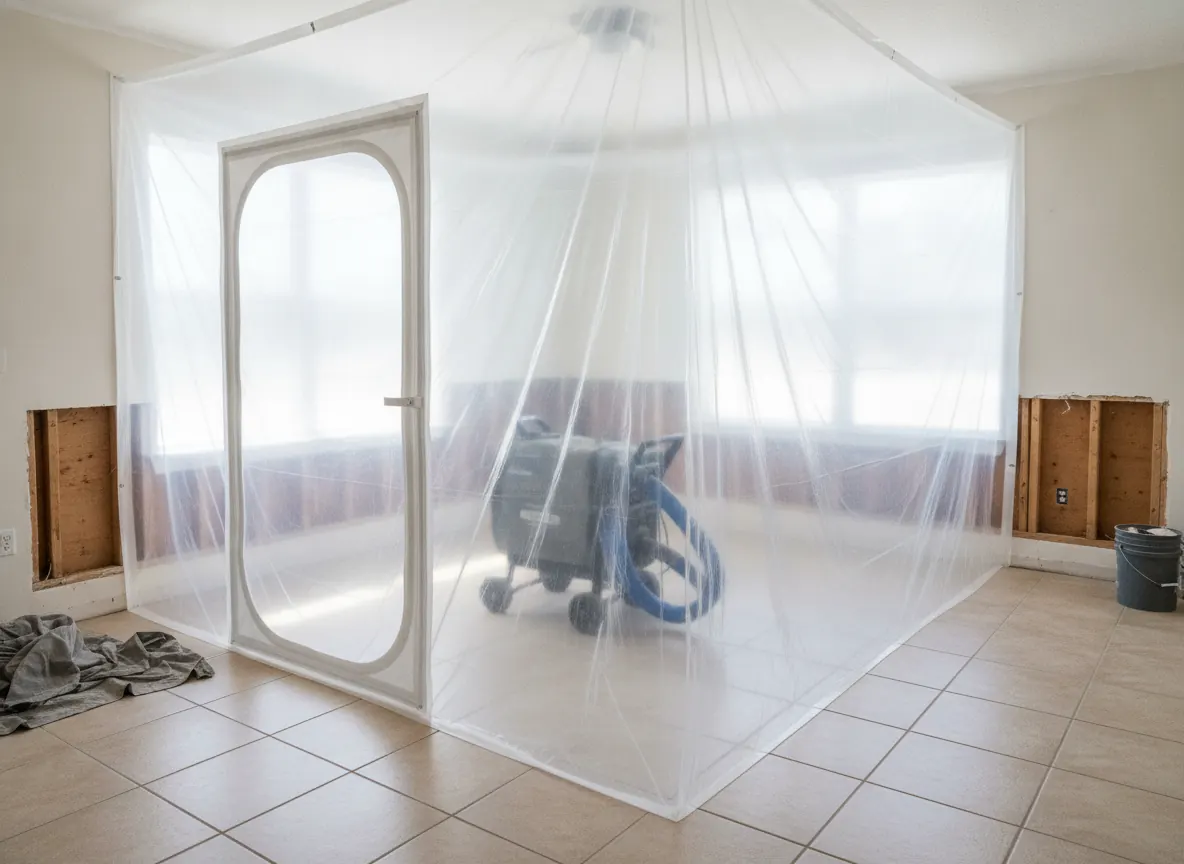
If you found mold in your Sarasota home, one of the first questions is whether insurance will help pay. The honest answer is that it depends on your policy, on what caused the mold, and on how quickly the water was found and dried. Many Florida policies cover some mold, but only up to a limit.
This post explains where the common Florida mold limit comes from, how the source of the water affects which policy applies, the claim deadlines, and what to document. It is general information, not insurance or legal advice.
The short version. Many Florida homeowners policies limit mold coverage, often to $10,000, a limit that became standard after state-approved endorsements in 2002 and 2003. Check your declarations page. Flood damage goes to a flood (NFIP) policy; wind, roof and plumbing damage usually goes to the homeowners policy.
Does homeowners insurance cover mold in Florida?
Sometimes, and usually with a cap. Look on your declarations page and in your endorsements for a section with a name like "fungi, wet or dry rot, or bacteria," or anything that mentions mold. That section usually says how much the policy will pay for mold, and under what conditions.
No policy language is the same, so read your own, and call your insurer before you sign a remediation contract. Ask what the mold limit is, whether it applies to the cleanup only or also to tear-out and rebuilding, and what the insurer needs from you before work begins.
Where the $10,000 mold limit comes from
A Florida Senate interim report from December 2003 explains the history. On December 17, 2002, the state's insurance regulator approved a Florida Farm Bureau endorsement limiting mold coverage to $10,000 per occurrence, with a $20,000 annual aggregate. The report says this "became the standard endorsement" the regulator approved for other insurers.
That is why $10,000 shows up so often. It is not a number set by statute, and your policy may have a different limit, a higher limit you paid extra for, or different wording. Your declarations page is the only place that tells you what you have.
Why the source of the water matters
Insurers usually look at what caused the mold, not just the mold itself. Here is how the policies generally line up:
| What caused the water | Policy usually involved | What to check |
|---|---|---|
| Flooding, storm surge, rising water | Flood policy (NFIP or private flood) | Flood policy terms and what the insurer expects you to do to limit mold |
| Wind or roof damage in a storm | Homeowners policy | Hurricane deductible, mold limit, claim deadline |
| A burst pipe or failed water line | Homeowners policy | Mold limit, and how the policy treats leaks that went on for a while |
| Long-term humidity, condensation or a slow leak | Often limited or excluded | The exclusions section and the mold or fungi endorsement |
| Condo unit finishes (cabinets, flooring, drywall coverings) | Often the owner's HO-6 policy | Your declaration and the association's policy |
These are general patterns, not promises. Your policy and your insurer decide. If mold followed a storm, the hurricane and flood mold page covers what to do first. If you live in a condo, see condo mold and who is responsible for condo mold in Florida.
Does flood insurance cover mold?
Flood damage is a separate claim on a flood policy, either through the National Flood Insurance Program (NFIP) or a private flood insurer. FEMA has said that NFIP policyholders are responsible for minimizing the growth and spread of mold. In practice, that means drying the home as soon as it is safe and keeping records of what you did. If you could not get into the house, write down why and when you got back in.
Florida claim deadlines
Under s. 627.70132, a hurricane or windstorm claim must generally be reported within 1 year of the loss (18 months for a supplemental claim). For a hurricane, the date of loss is tied to landfall or to when NOAA verifies the event. Helene (September 2024) and Milton (October 2024) were more than a year ago, so if you are still finding damage from those storms, ask your insurer or a licensed professional about your options.
How to document mold for an insurance claim
- Photos and video of the mold, the water source and the damaged materials, before anything is removed
- The date you found the water or mold, and the date of the storm or leak if you know it
- What you did to stop the water and dry the home, with receipts for fans, dehumidifiers or emergency repairs
- Written estimates that list what will be removed and why
- A written assessment from a licensed mold assessor, if the insurer asks for one or the scope is disputed
- Copies of every letter and email with the insurer, the association or the landlord
A mold assessment can help when the extent of the damage is in question. EPA says that in most cases, if visible mold growth is present, sampling is unnecessary, so testing is optional. See the mold inspection and testing page for when it helps. In Florida, a company that does the mold assessment generally can't also do the remediation on the same structure within 12 months, and vice versa (s. 468.8419).
How remediation costs compare with a $10,000 limit
| Item | Typical range | Source |
|---|---|---|
| Mold remediation, typical job | $1,500 to $9,000 (avg about $3,500) · $1,200 to $3,750 (avg about $2,300) | Fixr, Aug 2025 · This Old House, Mar 2026 |
| HVAC / ducts | $3,000 to $10,000 | Fixr, Aug 2025 |
| Walls | $1,000 to $12,000 | Fixr, Aug 2025 |
| Whole house | $10,000 to $30,000 | Fixr, Aug 2025 |
Published national estimates, not quotes (Fixr, Aug 2025; This Old House with Angi data, Mar 2026). Sarasota-area quotes vary.
A small job may sit well under a $10,000 mold limit. A whole-house job after a flood, or one that involves the AC system, can go past it, and rebuilding is usually a separate cost. The Sarasota mold remediation cost guide has the full table and a calculator. Asking two or three independent companies for written quotes gives you something concrete to show your insurer.
Before you hire anyone
Florida licenses mold assessors and mold remediators through the Department of Business and Professional Regulation (DBPR) under Chapter 468, Part XVI. Before you hire, look up the company's license at myfloridalicense.com (search by name or license number). Be wary of any company that says it is "insurance-approved" or promises your claim will be paid. No contractor can promise that, and neither can this site. See mold removal for what a written remediation plan should include.
About this site. Sarasota Mold Experts is a free quote service, not a mold company. You describe the problem once, and independent local companies, which may pay to receive requests, can reply with quotes. Companies reply on their own schedules. Check each company's license at myfloridalicense.com before you sign anything.
Frequently asked questions
Does homeowners insurance cover mold in Florida?
Sometimes, usually up to a limit. Many Florida homeowners policies limit mold coverage, often to $10,000, a limit that became standard after state-approved endorsements in 2002 and 2003. Coverage often depends on what caused the mold. Check your declarations page and ask your insurer.
Is mold from a slow leak or high humidity covered?
Often not, or only in part. Many policies limit or exclude damage from long-term leaks, condensation or humidity. Read the exclusions and the mold or fungi endorsement in your policy, and ask your insurer how they would treat your situation before you sign for work.
How long do I have to file a hurricane claim in Florida?
Under s. 627.70132, a hurricane or windstorm claim must generally be reported within 1 year of the date of loss, and a supplemental claim within 18 months. For hurricanes, the date of loss is tied to landfall or NOAA verification. Ask your insurer about your specific dates.
Should I get a mold test for an insurance claim?
It can help if the extent of the mold is disputed or hidden inside walls. EPA says sampling is usually unnecessary when mold is visible. If you want testing, hire a licensed mold assessor that is a separate company from the remediator, and ask your insurer first.