
Condo Mold in Florida: Who Is Responsible, the Association or the Owner?
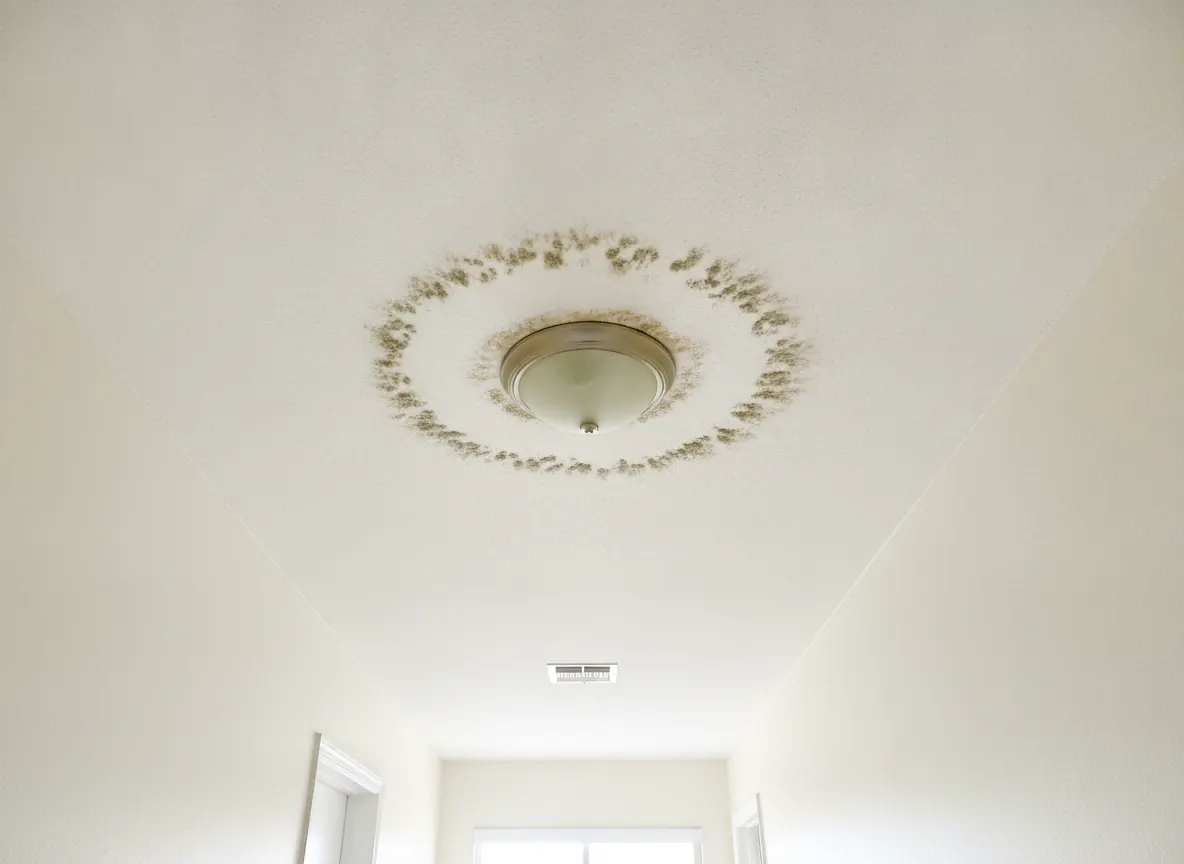
Mold in a condo raises a question a single-family homeowner never has to ask: whose problem is it? In Sarasota that question comes up often. In the City of Sarasota, 28.8% of housing units are in buildings with 20 or more units, and on Siesta Key and Longboat Key it is about 45% (American Community Survey 2020 to 2024).
Florida's condominium law, Chapter 718, sets the basic split between the association and the owner. Your building's declaration fills in the details. This post explains both.
Not legal advice. This is general information about Florida law. Every declaration is different, and the facts of each leak matter. Read your declaration and talk to your manager in writing. For a dispute, talk to a Florida attorney.
What Florida law says about condo maintenance
The starting point is s. 718.113(1): "Maintenance of the common elements is the responsibility of the association, except for any maintenance responsibility for limited common elements assigned to the unit owner by the declaration." Common elements usually include the roof, exterior walls, shared pipes and hallways. Limited common elements are parts used by only some owners, such as a balcony, and the declaration can assign their upkeep to those owners.
What the association's insurance covers, and what it excludes
Section 718.111(11) splits insurance between the association and the owners:
- The association's policy (f) must cover the condominium property as originally installed, or replacement of like kind and quality. It must exclude personal property in the unit and the unit's floor, wall and ceiling coverings, electrical fixtures, appliances, water heaters, water filters, built-in cabinets, countertops and window treatments.
- The owner's policy (g), often called an HO-6, must conform to s. 627.714. Owners pay to rebuild the parts of the condominium property they are required to insure.
- After an insurable event (j), the association generally repairs damaged property as a common expense. The owner pays the uninsured cost if the damage was caused by the owner's intentional conduct, negligence, or failure to follow the declaration, or by someone connected to the owner.
So who pays for mold in a Florida condo?
The answer usually follows the water. Here is how it often works out, subject to your declaration:
| Where the mold is, or where the water came from | Who often handles it | Where to look |
|---|---|---|
| Hallway ceiling, roof, exterior wall, shared pipe | Usually the association | s. 718.113(1); your declaration |
| Inside your unit, caused by a common element leak | Often the association for the structure, the owner for finishes the association's policy excludes | s. 718.111(11)(f), (g), (j) |
| Your unit's cabinets, flooring, wall coverings, appliances | Often the owner and the owner's HO-6 policy | s. 718.111(11)(f), (g) |
| A leak from your own water heater, washer or toilet | Often the owner, especially if neglect is involved | s. 718.111(11)(j); your declaration |
| Balcony, AC equipment or other limited common elements | Depends on what the declaration assigns | Your declaration |
| Damage that spread to a neighbor's unit | Depends on the source and the declaration | Your declaration; both owners' insurers |
These are general patterns, not rulings. Some declarations assign the AC system, windows or sliding doors to the owner, and others do not. The condo mold page covers the practical side of a condo mold job.
Read your declaration first
Your declaration of condominium, and any amendments, is where the general rules above get specific. Look for:
- The definition of the unit boundaries (often the unfinished interior surfaces of walls, floors and ceilings)
- Which limited common elements the owner must maintain
- Who maintains the AC system, water heater and plumbing lines that serve only your unit
- Rules on notice, access to units and hiring outside contractors
- What the association requires from a contractor before work starts, such as proof of insurance
If you can't find your declaration, ask the manager for a copy in writing.
What to do when you find mold in your condo
Stop the water if you can
Shut off a fixture valve or the unit's main valve if your own plumbing is leaking. If water is coming from above or from a wall, call the manager right away.
Photograph everything
Take photos and video of the mold, the stain, and any visible source before anything is cleaned or removed. Note the date.
Notify the association in writing
Email or write to the manager or board, describe what you found and where, and ask what they plan to do. Keep a copy.
Call your HO-6 insurer
Ask about your mold limit and what the insurer needs. Many Florida homeowners policies limit mold coverage, often to $10,000. Check your declarations page.
Get an assessment if the scope is unclear
A licensed mold assessor can map where the moisture and mold are. In Florida, a company that does the mold assessment generally can't also do the remediation on the same structure within 12 months, and vice versa (s. 468.8419). See mold inspection and testing.
Hire a licensed remediator in writing
Get a written plan and contract, and coordinate access and containment with the association. See mold removal.
Mold in a condo that sat closed for the summer
Siesta Key and Longboat Key have many seasonal units, and a closed unit with the AC off or set very high can build up humidity through a Sarasota summer. If the mold came from indoor humidity rather than a leak, it is harder to point to a common element, and insurance may treat it differently from a sudden water loss. Prevention is the easier fix. See how to prevent mold in a closed-up home and AC and HVAC mold.
Hiring a mold company in a condo
Florida licenses mold assessors and mold remediators through the Department of Business and Professional Regulation (DBPR) under Chapter 468, Part XVI. Before you hire, look up the company's license at myfloridalicense.com (search by name or license number). Then ask for:
- The DBPR license number
- A written contract (s. 468.8422)
- Proof of insurance (the law requires $1,000,000 general liability, s. 468.8421)
- A written assessment or remediation plan
- A clearance test by an independent assessor, if you want one
Condo jobs often cost more than the same size job in a house because of access rules, elevators, shared walls and containment in hallways. The Sarasota mold remediation cost guide lists published ranges.
About this site. Sarasota Mold Experts is a free quote service, not a mold company. You describe the problem once, and independent local companies, which may pay to receive requests, can reply with quotes. Companies reply on their own schedules. Check each company's license at myfloridalicense.com before you sign anything.
Frequently asked questions
Who is responsible for mold in a Florida condo?
It usually depends on where the water came from and what your declaration says. Under s. 718.113(1), the association maintains common elements. Unit finishes such as cabinets, flooring and wall coverings are often the owner's to insure under s. 718.111(11). Read your declaration and notify the association in writing.
Does the condo association have to fix mold caused by a roof leak?
The roof is usually a common element, so the association is generally responsible for maintaining it (s. 718.113(1)). After an insurable event, the association generally repairs damaged property unless an owner's negligence caused it (s. 718.111(11)(j)). Your unit's finishes may still fall to your HO-6 policy.
Is my AC unit the association's responsibility?
It depends on your declaration. Some declarations make AC equipment serving one unit the owner's responsibility, often as a limited common element, and others do not. Check the maintenance section of your declaration and ask the manager in writing.
Should I tell the association before I hire a mold company?
Yes. Notify the manager or board in writing, describe what you found, and ask about their rules for contractor access and insurance. Coordinating first helps if the source turns out to be a common element and avoids disputes over the work.