
Mold Removal vs. Mold Remediation: What the Words Mean in Sarasota
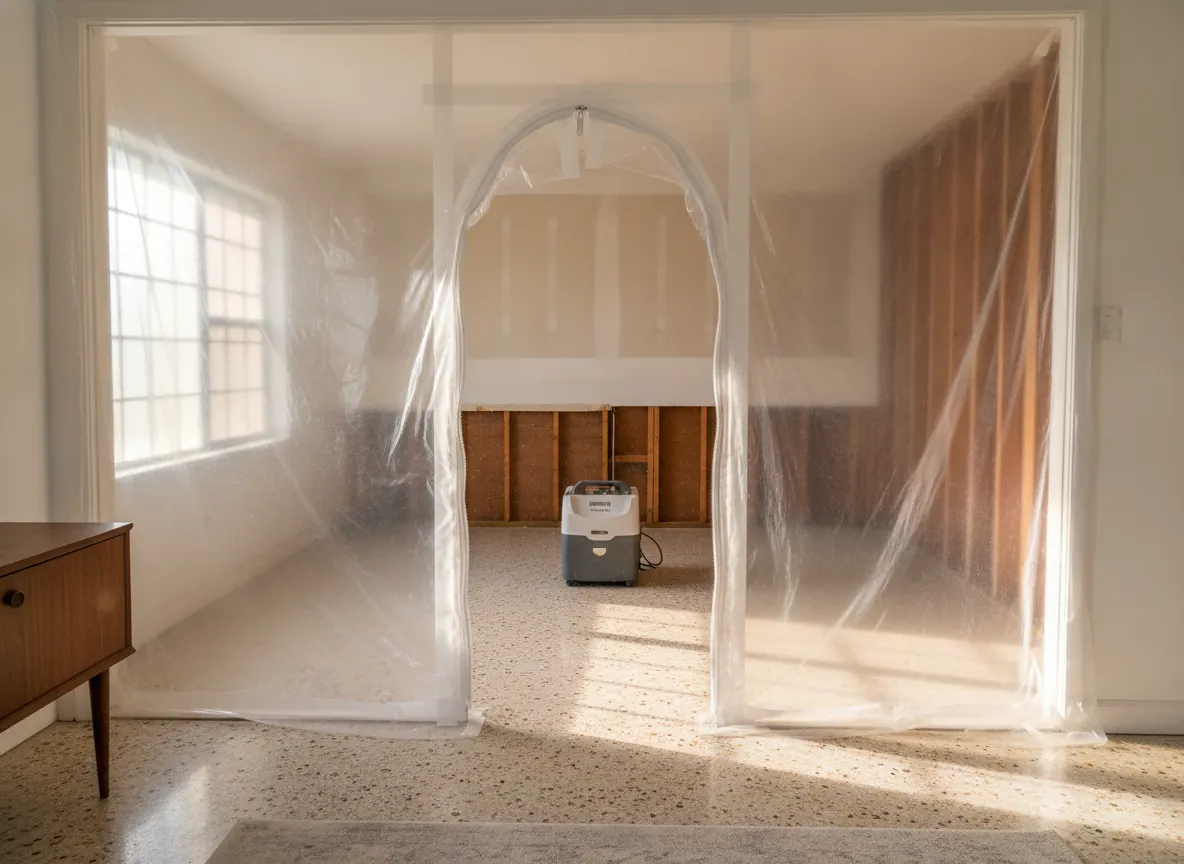
The difference between mold removal and mold remediation is scope. Removal means cleaning off or cutting out the mold you can see. Remediation is the whole job: finding how far the growth goes, sealing off the area, removing or cleaning moldy materials, and fixing the moisture so it doesn’t come back. In Florida the line is also legal. The state defines mold remediation as “the removal, cleaning, sanitizing, demolition, or other treatment” of mold growth “of greater than 10 square feet” (s. 468.8411). So in Sarasota, removal is one step inside remediation, and once the area passes 10 square feet the work falls under a state license.
Companies use both words loosely in ads, so here is what each one should mean when a quote lands in your inbox.
How Florida law defines mold remediation
Florida licenses mold assessors and mold remediators through the Department of Business and Professional Regulation (DBPR) under Chapter 468, Part XVI. The definitions in s. 468.8411 do the sorting:
- Mold assessment is a process that includes physical sampling and evaluating the results to find the origin, identity, location and extent of growth over 10 square feet.
- Mold remediation covers removal, cleaning, sanitizing, demolition or other treatment, including preventive steps, for growth over 10 square feet.
Below that size, EPA says cleanup can usually be handled by the homeowner (an area of roughly 3 feet by 3 feet). Homeowners may also work on their own home (s. 468.841). Some contractors with other state licenses, such as construction contractors under chapter 489, are exempt when they work within their own license, so ask which license covers the job. Before you hire, look up the company at myfloridalicense.com by name or license number. Our Florida mold license lookup guide walks through it.
Quick rule of thumb. A spot on a bathroom grout line is a cleaning job. A wall, ceiling or closet with growth bigger than about 3 by 3 feet is remediation, and Florida expects a remediator with a DBPR license to do it if you hire it out.
Mold removal vs. remediation inside a Sarasota home
Housing age matters here. In the City of Sarasota the median home was built in 1976, and about 58% of homes were built before 1980 (American Community Survey 2020–2024). Older plumbing, roofs and window frames give slow leaks more places to hide behind finished walls.
That is where removal and remediation part ways. Wiping mold off tile or a painted window sill is removal. Deciding what has to come out is remediation. EPA says absorbent or porous materials such as ceiling tiles and carpet may have to be thrown away once they are moldy. Drywall is a judgment call: EPA says it may be dried in place if there is no obvious swelling and the seams are intact, but the wall cavity is the hardest area to dry and should be ventilated if the drywall stays.
That question is still live in Sarasota two years after the 2024 storms. Helene’s surge reached Longboat Key in late September 2024, and Milton made landfall on Siesta Key on October 9, 2024. Many walls were dried and closed up quickly. If a room smells musty now, a removal-only quote that wipes the visible spots may miss growth inside the cavity. A full remediation scope should say how the company will check behind the wall. See mold after hurricanes and floods for the storm side.
Condos change the picture too. In the city, 28.8% of homes are in buildings with 20 or more units (ACS). Containment keeps dust out of shared hallways and neighboring units, and the association may own the wall you are opening. Start with condo mold in Sarasota before anyone cuts drywall.
What a full remediation scope usually lists
When you compare quotes, a remediation scope should cover more than the word “removal.” Look for:
- How the work area will be sealed off from the rest of the home.
- Which materials will be cleaned and which will be cut out and bagged, room by room.
- How the area will be dried, and how dryness will be checked before anything is closed up.
- What caused the moisture and who fixes it (a plumber, roofer or AC contractor is often separate).
- A written record of what was removed, with photos.
The mold remediation process page shows the usual order of steps, and mold removal in Sarasota covers what to ask each company.
Testing, clearance and Florida’s two-company rule
Testing sits outside both removal and remediation. EPA says that in most cases, if visible mold growth is present, sampling is unnecessary. Testing helps when you smell mold but can’t find it, during a home purchase, in a dispute, or as a clearance check after the work.
In Florida, a company that does the mold assessment generally can’t also do the remediation on the same structure within 12 months, and vice versa (s. 468.8419). If you want a test before or a clearance test after, plan on a separate assessor. Details are on mold inspection and testing in Sarasota.
Where cost and rebuilding fit
Published national estimates, not quotes: Fixr (August 2025) puts a typical remediation job at $1,500–$9,000 and a bathroom at $500–$1,500. Sarasota-area quotes vary, and removal-only bids will look cheaper because they leave out containment, drying checks and the moisture repair. Compare scopes line by line in the Sarasota mold remediation cost guide.
Rebuilding is usually a separate step. Mold cleanup itself usually isn’t permitted work, but rebuilding often is. In unincorporated Sarasota County, removing drywall doesn’t need a permit, but replacing drywall more than 2 feet above the floor does (Building Official letter, October 2024). The City of Sarasota requires permits for most work. In Manatee County, drywall repair outside a flood zone generally needs no permit; in a flood zone, repairs need a permit and a substantial-damage review. Your rebuild contractor should confirm and pull any permit.
Frequently asked questions
Is mold remediation the same as mold removal?
Not quite. Removal is cleaning off or cutting out the mold. Remediation is the whole job: containment, removal, cleaning, drying and fixing the moisture. In Florida, remediation of growth over 10 square feet falls under a state license (s. 468.8411).
Can I remove a small patch of mold myself in Sarasota?
Usually, yes. EPA says areas under about 10 square feet, roughly 3 feet by 3 feet, can usually be handled by the homeowner, and Florida lets homeowners work on their own home (s. 468.841). Fix the leak or humidity first, or it will come back.
Can the company that tests for mold also remove it?
Generally not on the same structure within 12 months. Florida bars an assessor from remediating a structure it assessed in that window, and a remediator from assessing one it remediated (s. 468.8419). Plan on two separate companies if you want both.
Get remediation quotes, not just removal quotes
If the mold is bigger than a small patch, or it came back after you cleaned it, describe it once on the free quote form. Independent local companies serving Sarasota and Manatee counties reply with quotes, and you can compare full scopes side by side. Describe your situation any time; companies reply on their own schedules.